Your Trusted Advocate Through The Probate Process
When a loved one passes away, you may need to go through the legal process of settling their affairs. This is known as probate, and it involves validating their will and distributing their assets, among other tasks. It can be a long and arduous process, especially when you and your family are still grieving.
You deserve to have peace of mind knowing that the legal details are in the hands of a seasoned and trusted advocate.
Our founding attorney, Jennifer H. Sitterley, has over 15 years of experience helping families in Fairfield County and other nearby communities in Ohio. She is a National Elder Law Foundation-certified elder law attorney and an Ohio State Bar Association-certified specialist in elder law – the only attorney in Fairfield County holding both credentials.
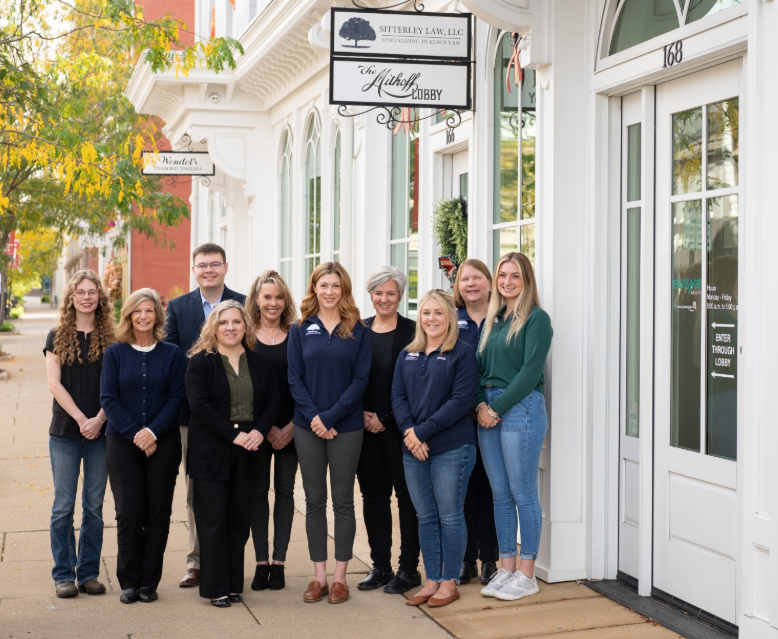
Together with our paralegals and staff at Sitterley Law, LLC, she is here to simplify the process and ensure your loved one’s wishes are fulfilled with care.
How We Guide You Through The Process
We will be with you at every step, providing the support you need when it comes to:
- Verifying the will and legal documents: We will guide you through the initial steps of filing the will and other necessary documents with the court to begin the probate process.
- Managing and valuing assets: Our team will help you identify, value and manage the assets of the estate, from bank accounts to real estate and personal property.
- Paying debts and taxes: We will ensure that any outstanding debts, final bills and taxes are paid correctly and in a timely manner, preventing potential issues for the estate.
- Distributing assets to heirs: We will work with you to distribute the remaining assets to the rightful beneficiaries, ensuring that your loved one’s wishes are honored and the process is as smooth as possible.
In Ohio, estates valued at $35,000 or less may go through a simplified probate process. This threshold increases to $100,000 if all assets pass to a surviving spouse. We will work with you to understand your specific situation and advise you on effective strategies to avoid issues such as tax complications, family disputes or creditor claims against the estate.
The Costs Of Probate In Ohio
Sitterley Law, LLC, represents executors, administrators and families in probate administration matters before the Fairfield County Probate Court. How much does it cost?
Ohio law sets a statutory fee schedule that dictates maximum executor commissions based on the total value of the estate.
Statutory executor commissions are calculated at 4% on the first $100,000, 3% on the next $300,000, and 2% on amounts over $400,000 for personal property and the gross proceeds of any real estate sold, while real estate that is not sold yields a statutory fee of 1%.
Attorney fees in Fairfield County estate matters are not arbitrary and do not depend on fixed percentages alone. The Fairfield County Probate Court judge reviews every attorney fee request and must approve legal fees as reasonable before payment occurs from estate funds. This judicial oversight ensures transparent legal costs and protects estate beneficiaries throughout the probate process.
What Specific Assets Bypass Probate In Ohio?
Certain types of property transfer directly to designated beneficiaries upon death without passing through the probate court. These are called “nonprobate assets.”
Establishing nonprobate asset designations during your lifetime ensures that those funds and properties transition immediately to your heirs without administrative delays or court supervision.
The following transfer mechanisms allow specific assets to pass directly to beneficiaries outside of the Ohio probate process:
- Transfer on death (TOD) designation affidavits for real estate are recorded with the county recorder, while TOD beneficiary designations for vehicles are submitted to the county clerk of court’s title office to issue an updated title listing the beneficiary.
- Payable on death (POD) account designations for checking, savings and certificate of deposit accounts, which allow financial institutions to disburse funds directly to named individuals upon presentation of a death certificate.
- Joint tenancy with rights of survivorship, which automatically transfers full ownership of real property or financial accounts to the surviving joint owner upon the death of one owner.
Properly coordinating these transfer mechanisms prevents financial interruption for surviving family members. To integrate these designations into a broader wealth protection strategy, review the firm’s Estate Planning page.
Ancillary Probate: Handling Out-Of-State Property
Ancillary probate is a secondary court proceeding that is required when a deceased person owns real estate that is located outside their primary state of residence. If an Ohio resident dies owning real estate solely in their name in another state – such as a Florida vacation home – Ohio’s probate courts lack jurisdiction over it.
When this happens, the estate’s executor must open a primary probate estate in the appropriate Ohio probate court in order to administer the deceased person’s personal property, local bank accounts and Ohio real estate.
Simultaneously, the executor must also initiate an ancillary probate proceeding in the specific county and state where the out-of-state real property sits.
Attorney Jennifer H. Sitterley guides families through multistate estate procedures, coordinating with secondary jurisdictions to resolve out-of-state real estate transfers efficiently.
Understanding Probate In Ohio: Your Questions Answered
Facing the probate process often raises more questions than it provides answers. You may feel uncertain about your duties, what to expect or where to begin. To help you find your footing, we have addressed some of the most frequently asked questions we receive from clients in Ohio.
How long does probate take in Ohio?
The time it takes to complete probate varies for each family. A straightforward estate with a clear will and no disputes might conclude in about six months to a year.
However, several factors can extend this timeline. Complex estates with many assets, debts or family disagreements can extend well beyond a year. The county where you file can also affect timing, as some courts clear more cases faster than others.
When does an estate have to go through probate?
In Ohio, an estate must go through probate when the person who passed away owned assets solely in their own name. These assets can include bank accounts, real estate or vehicles that do not have a co-owner or a named beneficiary. The probate process provides the legal authority needed to transfer ownership of these assets to the rightful heirs.
That said, not all property requires this process. Assets held within a trust or accounts with a designated beneficiary typically pass directly to that person.
Does the probate process change if the deceased person didn’t leave a will?
Yes, the probate process changes significantly if the deceased person did not leave a will. Instead of following the deceased person’s written wishes, Ohio’s intestacy laws step in, guiding the distribution of assets among family members based on a fixed formula.
The court also appoints an administrator rather than using an executor named in a will. This often makes the process longer and potentially more complicated. Family members may need to petition the court to serve as administrator.
We Are Here To Help. Call Us Today.
When you and your family are still processing and healing from your loss, the last thing you should have to worry about is legal paperwork.
Let us at Sitterley Law, LLC, take that burden off your shoulders. Contact us today to schedule a consultation about the probate process. Call us at 740-681-1765 or send us a message through our website.